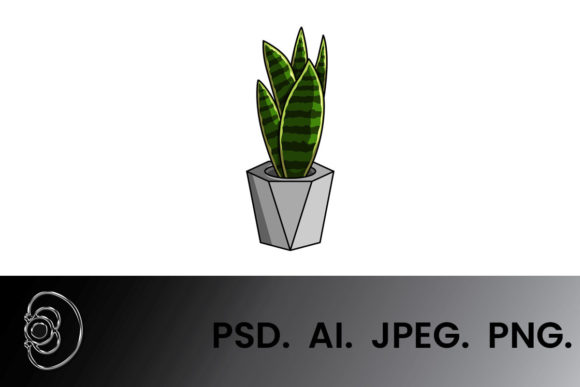
Sansevieria Floral Cartoon Illustration for Creative Projects
If you've found yourself looking for a design asset that's both charming and versatile, you've likely landed on the idea of a Sansevieria floral cartoon illustration. This isn't just a simple drawing of a snake plant. It's a stylized, friendly interpretation that merges the strong, architectural form of the Sansevieria with playful floral elements and a cartoon aesthetic. The result is a graphic that feels approachable, modern, and brimming with creative potential.
What makes this particular illustration style so interesting and useful is its inherent balance. It captures the resilience and clean lines of the popular houseplant—a symbol of endurance and low-maintenance growth—while softening it with decorative blooms and a whimsical style. This duality opens doors. You can evoke feelings of nature, wellness, and growth without being overly literal or clinical. The cartoon aspect adds a layer of personality, making it suitable for projects that need to feel human, inviting, or even a bit quirky.
The Creative Possibilities Are in Your Hands
The true power of this asset, especially when you acquire the vector files, lies in its adaptability. A vector illustration isn't a static image; it's a set of mathematical paths you can edit, recolor, resize, and deconstruct without any loss in quality. This means the provided Sansevieria floral cartoon illustration is a starting point, not a final destination.
Imagine you're designing a logo for a plant subscription box service. You could isolate the bold Sansevieria leaves, simplify the floral accents, and use them as a clean, scalable logo mark. A blogger focusing on indoor gardening might extract the cheerful flowers, change their colors to match a blog theme, and use them as recurring iconography throughout their site. A marketer creating a social media campaign for a wellness app could resize the entire illustration to be a profile picture, then break it apart into smaller elements for a series of posts about growth and self-care.
Adapting Style and Approach for Different Audiences
The way you use this illustration should directly reflect who you're talking to and the context of your project. The core asset can be pushed towards different stylistic poles.
For a professional audience, such as in a corporate wellness newsletter, you might tone down the cartoon brightness. Use the EPS file to edit the lines to be slightly more refined, choose a more subdued, sophisticated color palette, and focus on the structural elegance of the plant. The floral elements become subtle accents rather than the main event.
Conversely, for a children's educational website about plants, you could amplify the cartoon qualities. Using the PSD file, you could make the colors more vibrant, perhaps add even more playful details to the flowers, and use the illustration as a central character in an infographic. The goal is to make learning feel fun and engaging.
Practical Applications and Project Ideas
Let's move from concept to concrete examples. Here are several realistic applications where this illustration package can serve as the foundation.
- Branding and Identity: The vector files allow you to create a cohesive visual language. Use the illustration as a primary logo element, then employ individual leaves or flowers as supporting patterns on packaging, business cards, or website backgrounds.
- Digital Content Creation: For bloggers, educators, and social media managers, the separate PNG and JPEG files provide ready-to-use graphics. The PNG with transparency is perfect for overlaying on videos or website headers. Think of using it in thumbnail images for articles about "low-maintenance success" or "growth in small spaces."
- Print and Merchandise Design: The high-quality, scalable EPS file ensures crisp printing. Apply the design to tote bags, greeting cards, wall art, or journal covers. The theme of a hardy, flowering plant resonates with products centered on perseverance, nature, and home.
- Interactive and Web Design: Web designers can animate parts of the vector illustration for subtle engagement on a landing page—perhaps a gentle sway of a leaf or a blooming flower on hover. UI designers might use the simplified floral elements as icons for an app's navigation.
Maintaining Clarity and Originality in Your Adaptations
While the asset is designed for editing, keeping your final results clear and effective requires a mindful approach. Start with a clear creative direction. Ask yourself: what emotion or message should this adapted illustration convey? Consistency is key. If you change the color scheme, apply it systematically across all the elements you use. If you simplify the illustration for a logo, ensure that simplification carries through to any secondary patterns.
To keep your work audience-friendly, consider readability and recognition. If you are removing details, ensure the core symbol—the Sansevieria—remains identifiable. If you are adding elements, do so in a way that complements the existing style, not clashes with it. The PSD file, with its likely layered structure, is invaluable here, allowing you to toggle elements on and off to test different compositions.
From One Asset to a Multitude of Ideas
The journey from downloading the package—containing the versatile EPS, JPEG, PNG, and PSD files—to final implementation is a creative process. It invites you to interpret, not just use.
A freelance designer might see it as a base for a client's eco-friendly brand. A hobbyist creating custom wedding invitations might recolor the flowers to match the wedding theme, using the illustration to symbolize enduring love. A publisher might commission an illustrator to use the vector paths as a reference to create a full series of cartoon houseplant characters for a book.
The illustration is a tool. Your context, your audience, and your goals are the guiding forces. By editing the scalable vector paths, you can align this charming Sansevieria floral cartoon illustration with virtually any medium, from a massive banner to a tiny app icon, and any tone, from serious to sweet. It provides a professional-grade starting point that empowers you to create something uniquely suited to your project, ensuring your final designs are as resilient and adaptable as the plant they depict.